Morrison Hotel housekeeping access policy
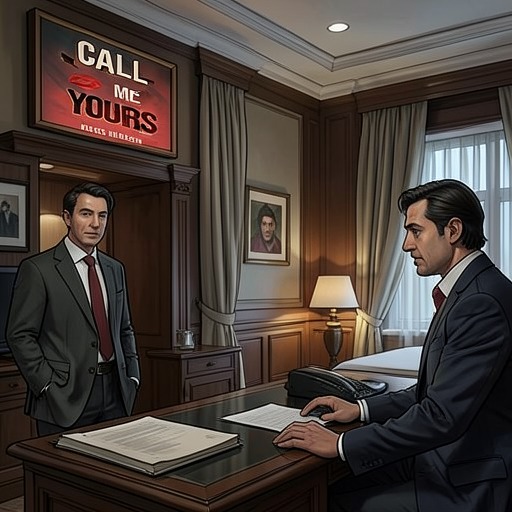
Call Me YoursThe Morrison Hotel housekeeping access policy is a workplace rule that restricts housekeeping staff to the first floor and their designated workstations, barring them from the private elevator. The restriction turns the hotel’s vertical layout into a boundary between employees and Kayla’s office—and, for Kayla and Chris, a barrier that helps keep their relationship out of sight.
Scope and Operation
Jessica explains that housekeeping staff work on the first floor, while Kayla’s office is on the second. Staff are not permitted to use the private elevator or leave their workstation. The rule therefore regulates both movement between floors and access beyond an employee’s assigned area; it is not simply a division of job duties.
The policy sits within a broader pattern of rules surrounding Kayla’s properties, though those rules should not be mistaken for the hotel restriction itself. At Morrison Villa, employees are also subject to strict instructions, including limits on when they may approach Kayla and a prohibition against befriending Adi. At the hotel, however, the relevant boundary is occupational and spatial: housekeeping remains downstairs, away from Kayla’s office.
Chris and Kayla’s Discovery
The policy becomes consequential when Kayla asks Jessica why she has never met Chris. Jessica identifies him as a janitor and points out that his work is on the first floor, while Kayla’s office is on the second; the access limits offer a concrete explanation for their separation within the same hotel. The exchange reveals how a rule that might otherwise seem routine can shape which people are able to encounter one another.
Kayla initially responds defensively to the implication that Chris’s occupation matters. She then acknowledges the practical force of the explanation, before telling Jessica that Chris is her boyfriend and that they are in love. The policy does not itself cause their relationship, but it helps account for why it has remained disconnected from Kayla’s workplace and from her assistant’s direct knowledge of him.
Workplace Boundary and Narrative Significance
Kayla owns the Morrison Group of Hotels and works at the popular Morrison Hotel, yet ownership does not erase the building’s internal divisions. Her office occupies a different floor from the housekeeping staff’s work area, and the private elevator marks a controlled route between them. In this setting, access is organized by position: the person who employs hotel workers and the workers who maintain the hotel do not share the same permitted spaces.
The restriction gains further significance against Kayla’s concern that men approach her for her wealth rather than for herself. In her correspondence with Chris, she presents his lack of interest in her finances and occupation as evidence that he values her as a person. The hotel’s access rules make the contrast concrete: Chris works within her business, but the limits on where he can go keep him from casually entering her office or crossing into her sphere. The policy thus functions both as workplace control and as an inadvertent screen between Kayla’s public authority and a relationship she experiences as private.